What Is a Tooth Abscess?
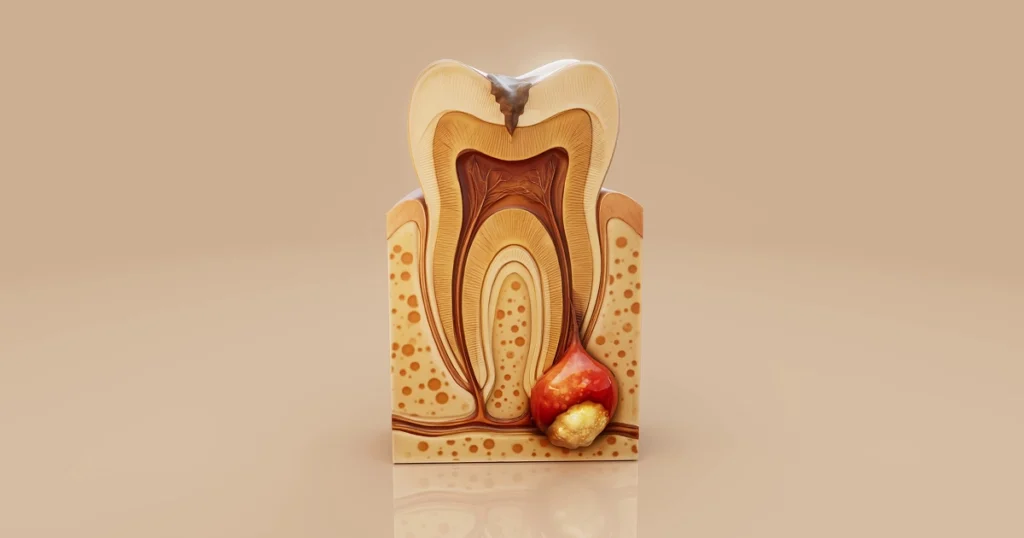
A tooth abscess is a pocket of pus that forms when a bacterial infection takes hold in or near a tooth. Your body walls off the infection, and pressure builds inside that pocket — which is often what causes the throbbing pain people describe.
There are two common types, in plain terms:
- A periapical abscess forms at the tip of the tooth’s root. It usually starts when decay or a dying nerve lets bacteria reach the soft center (the pulp) of the tooth.
- A periodontal abscess forms in the gum and the supporting tissue around a tooth, often linked to gum disease.
Both are infections, and both need a dentist. The type and location help your dentist decide on the right treatment.
Signs and Symptoms of a Tooth Abscess
Tooth abscess symptoms can come on gradually or seem to appear overnight. Watch for:
- A throbbing or persistent toothache that doesn’t ease up
- Pain that radiates to your jaw, ear, or neck
- Sensitivity to hot and cold
- Pain when chewing or biting down
- Swelling in the face or cheek
- Tender, swollen lymph nodes under the jaw or in the neck
- Fever
- A bad taste in the mouth or foul breath
- A pimple-like bump on the gum
One important note: sometimes the pain suddenly stops. This can happen when the nerve inside the tooth dies. It may feel like relief, but the infection is still active and still dangerous — so the disappearance of pain is never a sign that an abscessed tooth has healed.
Gum Boil: The Pimple-Like Bump on Your Gum
A gum boil is a small, pimple-like bump that shows up on the gum, and it’s often the visible sign of a draining abscess. When pressure builds inside an infection, the body sometimes creates a little channel to the surface, and a gum boil is where that channel opens. It may release pus and leave a sudden bad taste in your mouth, which can briefly ease the pressure and pain.
It’s tempting to treat a gum boil like a skin pimple, but please don’t pop it or ignore it. A gum boil signals an active infection underneath that needs a dentist to find and treat the source. Draining it yourself doesn’t fix what’s causing it, and it can push bacteria deeper.
What Causes a Tooth Abscess?
A tooth abscess almost always starts when bacteria find a way into or around a tooth. Common causes include:
- Untreated decay — a cavity that reaches the pulp (the nerve and blood supply) inside the tooth
- A cracked or broken tooth that gives bacteria a direct path inside
- Gum disease, which creates pockets where infection can take hold
- Failed or aging dental work, where bacteria slip in around an old filling or crown
- Trauma to a tooth, even an injury from years ago
Because a cracked or broken tooth is such a common entry point, it’s worth acting quickly on any damage. If you’ve chipped or broken a tooth, see our guide on what to do for a chipped or broken tooth — treating it early can keep bacteria out and head off an abscess entirely.
Is a Tooth Abscess a Dental Emergency?
Yes — a tooth abscess always needs prompt professional care and should never be left to run its course. The question is how fast, and that depends on your symptoms.
For most abscesses, the right move is to call a dentist right away and see an emergency dentist as soon as possible. Don’t wait for the weekend to pass or hope it settles.
Some symptoms, though, are red flags that mean you should seek emergency medical care immediately — go to an ER or urgent care, not just the dentist:
- Swelling that is spreading to your eye or down your neck
- Difficulty breathing or swallowing
- A high fever
- Swelling that is rapidly getting worse
The reason is simple: a dental infection can spread into the surrounding tissues and beyond, and in rare cases that becomes life-threatening. These signs mean the infection may be moving, and time matters. When in doubt, treat it as urgent.
How Dentists Treat a Tooth Abscess
The goal of treatment is always the same — drain the infection and treat the source. The exact approach depends on your situation:
- Incision and drainage to release the pocket of pus and relieve pressure
- Root canal treatment to clean out the infection and save the tooth when possible
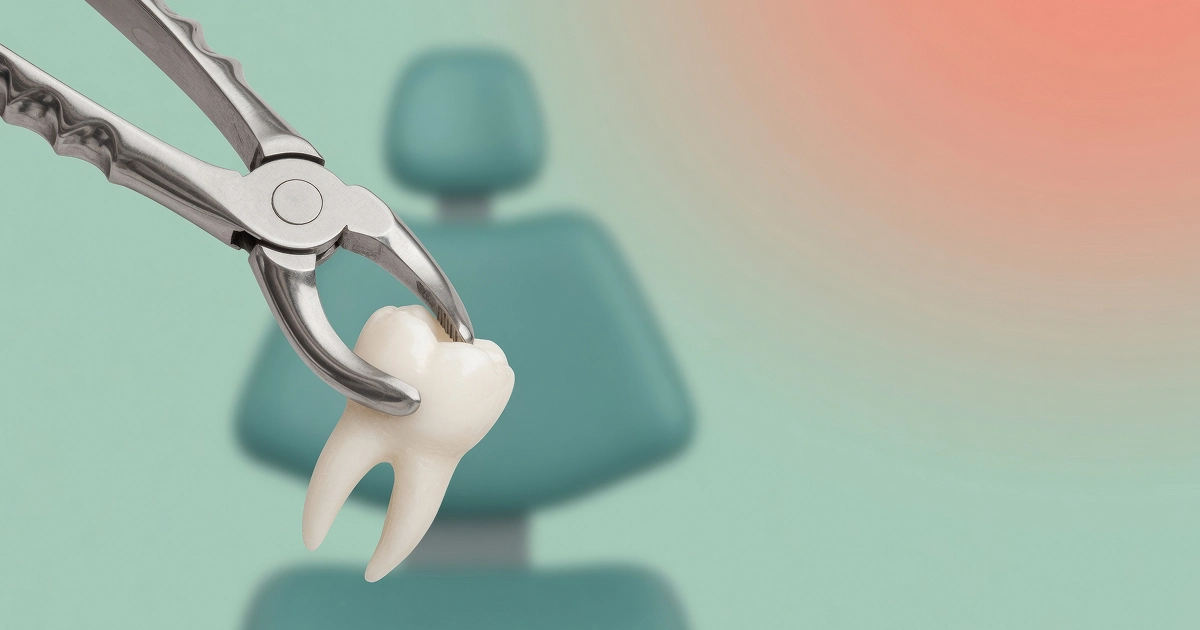
- Extraction if the tooth is too damaged to save
- Deep cleaning of the gum pocket for a periodontal (gum) abscess
- Antibiotics as a support to help control the spread of infection
That last point is worth emphasizing: antibiotics alone do not cure a tooth abscess. They can calm an infection and stop it spreading, but they don’t remove the underlying source. The tooth or gum still needs hands-on treatment, or the problem comes back.
If a tooth can’t be saved and has to be removed, you have good options to restore your smile and bite — including a dental implant, which replaces both the root and the visible tooth. Your dentist will talk you through what fits your situation. Every case is a little different, and the plan is always tailored to you.
What You Can and Can't Do at Home
Home care can ease your symptoms while you arrange to be seen — but it is never a substitute for treatment. In the meantime, you can:
- Rinse gently with warm salt water
- Use over-the-counter pain relief as directed on the label
- Apply a cold compress to the outside of your cheek for swelling
Just as important, here’s what not to do:
- Don’t try to pop or drain a gum boil yourself
- Don’t treat the pain stopping as a sign you’ve healed — a dead nerve can hide an active infection
- Don’t skip the dentist even if your symptoms ease
An abscess needs professional care, and the sooner you get it, the easier the fix tends to be.
How to Prevent a Tooth Abscess
Most abscesses trace back to a problem that could have been caught early. To lower your risk:
- Brush twice a day and floss daily to keep decay and gum disease at bay
- Keep up with routine checkups and cleanings so small cavities and cracks are spotted before they reach the nerve
- Treat cavities promptly rather than waiting for them to hurt
- Have a cracked or chipped tooth looked at before bacteria can get in
- Manage gum disease with your dentist’s guidance
A tooth abscess won’t fix itself — and the sooner it’s treated, the more comfortable you’ll be and the better the chance of saving the tooth. If you have signs of an abscess, don’t wait it out; see an emergency dentist and get seen right away. If you have red-flag symptoms like spreading swelling, trouble breathing or swallowing, or a high fever, seek emergency medical care immediately.
EXO Dental serves patients at three offices: Rogers, AR · Topeka, KS · Van Buren, AR.
Frequently asked questions
Will a tooth abscess go away on its own?
No. An abscess is an active bacterial infection, and it needs professional treatment to clear. The pain may fade — sometimes because the nerve has died — but the infection stays put and can spread. Only a dentist can remove the source.
Is a tooth abscess a dental emergency?
It always needs prompt care. Seek emergency medical care immediately if you have spreading facial swelling, swelling near the eye or down the neck, difficulty breathing or swallowing, a high fever, or swelling that’s rapidly worsening. Otherwise, call a dentist right away to be seen as soon as possible.
Can antibiotics cure a tooth abscess?
Antibiotics can help control the infection and stop it spreading, but they don’t fix what’s causing it. The tooth or gum still needs treatment — such as drainage, a root canal, or extraction — or the abscess is likely to return.
What is the bump on my gum (gum boil)?
A gum boil is usually a draining abscess surfacing on the gum. Don’t pop it or ignore it. It points to an active infection underneath that a dentist needs to find and treat.
How long can a tooth abscess go untreated?
It shouldn’t be left untreated at all. Over time the infection can spread into nearby tissue and become dangerous, so the safest answer is to seek care promptly rather than wait.
Will I lose the tooth?
Not necessarily. Many abscessed teeth are saved with a root canal. An exam and X-rays help your dentist determine whether the tooth can be saved or whether it needs to be removed and replaced.