First, a quick overview
Dental implants are small titanium posts placed in your jawbone that act like artificial tooth roots. Once healed, they support a crown, a bridge, or a full set of teeth. Implants come in several forms: a single implant for one missing tooth, multiple implants for several teeth, or full-arch solutions that replace an entire row.
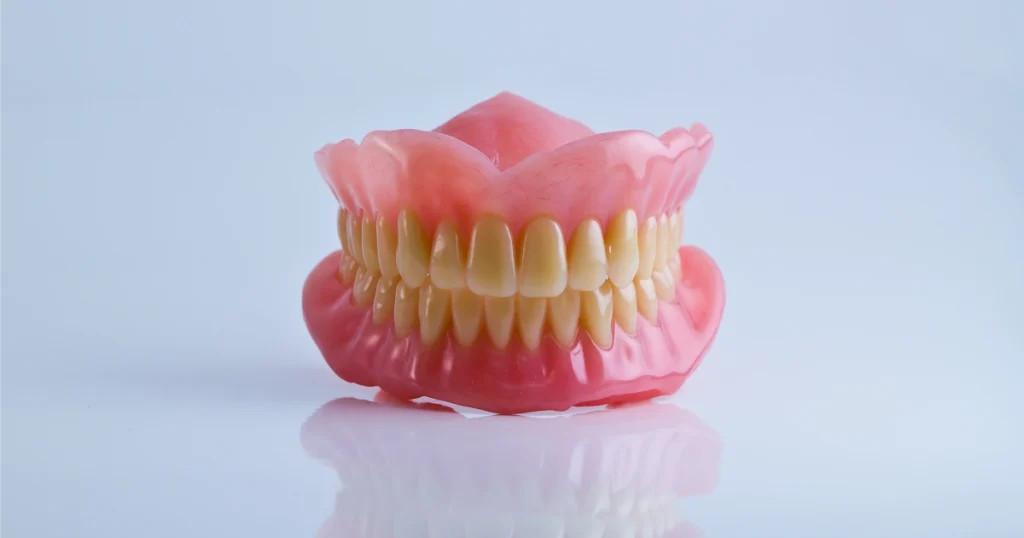
Dentures are removable (or sometimes fixed) replacements that sit on top of your gums. A full denture replaces all the teeth in an arch, while a partial denture fills in gaps when you still have some healthy natural teeth.
There’s also a middle option worth knowing about: implant-supported dentures, which combine a denture with a small number of implants for a more stable, secure fit. More on that below.
Comparing the options side by side
| Factor | Dental Implants | Traditional Dentures | Implant-Supported Dentures |
|---|---|---|---|
| Upfront cost | Higher | Lower | Moderate to higher |
| Longevity | Can last decades with good care | Typically replaced/relined every several years | Long-lasting; denture portion may need updating |
| Comfort & fit | Feel like natural teeth; no slipping | Can shift or loosen over time | More secure than standard dentures |
| Bone preservation | Helps maintain jawbone | Does not stop bone loss | Implants help preserve bone |
| Eating & function | Strong, near-natural chewing | Limited with certain hard/sticky foods | Improved chewing vs. standard dentures |
| Maintenance | Brush and floss like natural teeth | Remove, soak, and clean daily | Mix of both; some removable designs |
| Candidacy | Needs adequate bone and healthy gums | Suitable for almost everyone | Needs some bone for implants |
Cost: thinking beyond the sticker price
In general, dentures have a lower upfront cost, which is one reason many people start there. Implants typically cost more initially because they involve surgery and custom-made restorations.
That said, cost is about more than day one. Implants are designed to last many years, often decades, and don’t require the periodic relines or replacements that dentures often do. Over a long timeline, that can narrow the gap. We never quote exact prices online because your real number depends on your exam, imaging, and treatment plan. The best way to understand your options is a conversation with our team.
Longevity and durability
Dental implants are among the most durable restorations in dentistry. With good oral hygiene and regular checkups, the implant post can last a very long time, and the crown on top can be replaced if it ever wears.
Dentures are durable too, but they’re exposed to daily wear and the natural changes in your mouth. Because your jaw shape shifts over time (more on that next), dentures usually need relining or remaking periodically to keep fitting well.
Comfort, fit, and bone preservation
This is often the deciding factor. Because implants are anchored in the bone, they feel and function much like natural teeth, with no slipping, no adhesive, and no covering the roof of your mouth.
Implants also offer one benefit dentures can’t: bone preservation. When teeth are lost, the jawbone that once supported them gradually shrinks. Implants stimulate that bone the way natural roots do, helping maintain your jaw structure and facial shape. Traditional dentures rest on top of the gums and don’t prevent this gradual bone loss, which is partly why their fit changes over the years.
Eating, speaking, and daily life
Most patients find implants restore chewing power close to their natural teeth, so you can enjoy a wide range of foods comfortably. Dentures restore function well too, but some wearers find certain hard, crunchy, or sticky foods more challenging, especially with a looser fit.
Speech is similar: implants tend to feel seamless, while dentures can take a short adjustment period.
Maintenance
Implants are refreshingly simple to care for: brush and floss them like your natural teeth, and keep up with routine dental visits. Dentures require removing them for daily cleaning and soaking, plus occasional professional adjustments.
The middle ground: implant-supported dentures
If you love the affordability and familiarity of a denture but want more stability, implant-supported dentures may be the answer. A small number of implants anchor the denture firmly in place, reducing slipping and improving chewing, while still offering a more budget-friendly path than replacing every tooth with an individual implant. For many patients, this is the best of both worlds.
Who's a candidate for what?
Nearly everyone is a candidate for some form of denture, which makes them a flexible option when implants aren’t ideal. Implants require adequate jawbone and healthy gums, though treatments like bone grafting can expand who qualifies. Factors like overall health, certain medical conditions, and habits such as smoking also play a role. The only way to know for sure is a professional exam.
So, are implants better than dentures? Not universally. Implants excel at longevity, stability, and protecting your jawbone. Dentures shine on upfront affordability and broad candidacy. And implant-supported dentures bridge the two. The best choice is the one that fits your mouth, your health, and your life, and that’s a decision best made with a dentist who has examined you in person.
Still weighing dental implants vs. dentures?
Let’s find your answer together.
The EXO Dental team will examine your smile, listen to your goals, and walk you through every option, including implant-supported dentures, with honest, no-pressure guidance. Schedule your consultation at one of our three convenient offices:
Rogers, AR · Topeka, KS · Van Buren, AR.
Call today or request an appointment online, and take the first confident step toward a smile that feels like you.
Frequently asked questions
Are dental implants better than dentures?
Neither is better for everyone. Implants offer superior longevity, stability, and bone preservation, while dentures are more affordable upfront and suit almost anyone. The right choice depends on your individual needs, which a dentist can assess during an exam.
Which is more cost-effective over time, implants or dentures?
Dentures cost less initially, but they often need relines and replacements over the years. Implants cost more upfront but can last decades with proper care. For many patients, the long-term costs are closer than they first appear.
Can I switch from dentures to implants later?
In many cases, yes. Some denture wearers later choose implants or implant-supported dentures for a more secure fit. Your eligibility depends on your jawbone health, so a consultation is the best way to explore the option.
Do implants really prevent bone loss?
Implants stimulate the jawbone much like natural tooth roots, which helps preserve bone and facial structure. Traditional dentures rest on the gums and don’t provide this stimulation, so some bone loss can continue.
What are implant-supported dentures?
They’re dentures anchored by a few dental implants for a more stable, secure fit than standard dentures, often at a lower cost than replacing every tooth individually. They’re a popular middle-ground option.
Is the implant procedure painful?
Implant placement is done with anesthesia and is generally well tolerated. Most patients report manageable discomfort afterward that’s similar to a routine extraction and eases within a few days.