What is a dental crown?
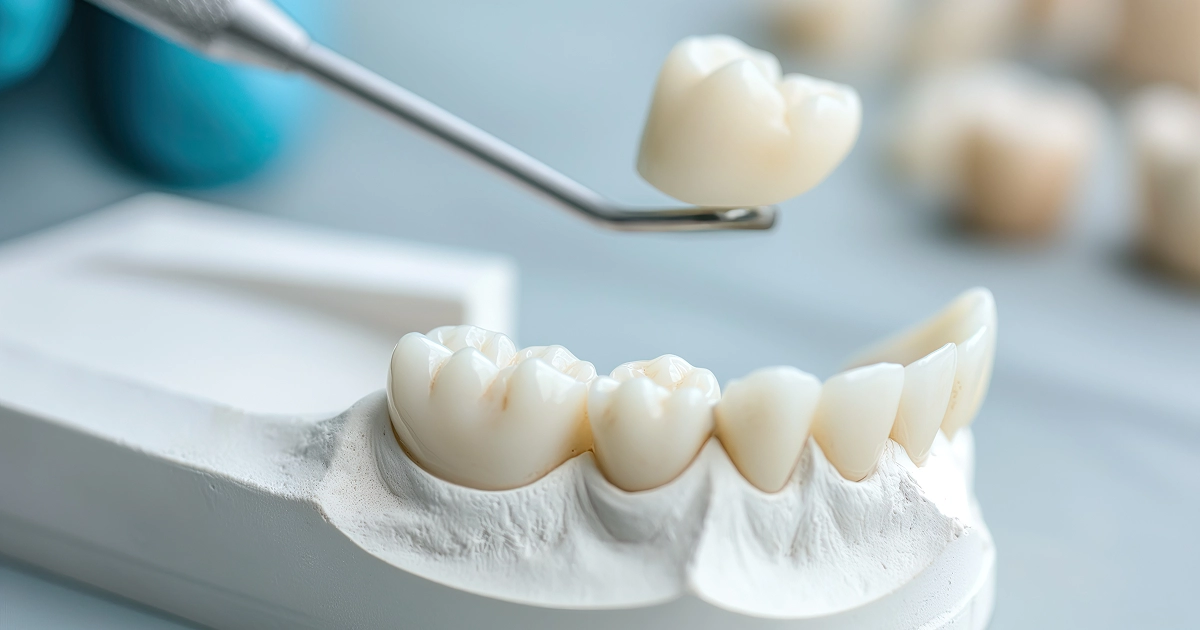
A dental crown is a custom-made cap that fits over a tooth to restore its shape, strength, and appearance. Think of it as a protective cover that surrounds the visible part of the tooth down to the gumline. Once it is cemented in place, it functions like a natural tooth for biting and chewing. A crown is different from a filling, which repairs a smaller portion of a tooth from the inside. A crown covers and reinforces the whole tooth.
Common reasons you might need a crown
Our dentists most often recommend a crown when a tooth needs more support than a filling can provide. Common situations include:
- A large or failing filling. When an old or oversized filling leaves too little healthy tooth behind, a crown can hold everything together.
- A cracked or weakened tooth. Cracks and heavily worn teeth are at risk of breaking further. A crown helps distribute the force of biting and protects what remains.
- After a root canal. A tooth that has had a root canal can become more brittle, so a crown is often placed afterward to protect it.
- Significant wear. Teeth worn down by grinding or years of use can sometimes be rebuilt with crowns.
- A broken tooth. When a tooth chips or breaks beyond what bonding can handle, a crown may restore it.
Types of dental crowns and materials
There are several crown materials, and the right one depends on the tooth’s location, how much it shows when you smile, and how much biting force it handles. At a general level, common options include:
- All-porcelain or all-ceramic crowns. Prized for a natural, tooth-like appearance, which makes them a frequent choice for front teeth.
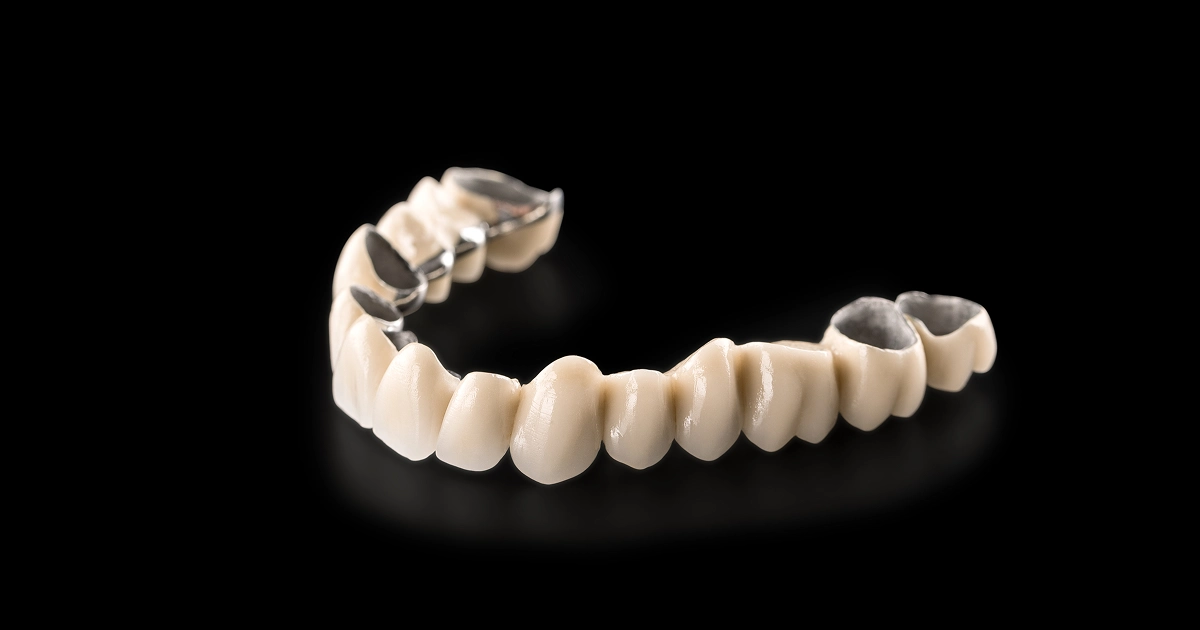
- Porcelain-fused-to-metal (PFM) crowns. A metal core gives strength, with a porcelain outer layer for a more natural look. A long-established, versatile option.
- Metal crowns (including gold alloys). Very durable and gentle on opposing teeth, though the color stands out, so they are often used on back teeth.
- Zirconia and other high-strength ceramics. Combine strength with a tooth-colored finish.
Our dentists will talk through which material suits your tooth and your goals at your exam. There is no single “best” crown for everyone.
The crown procedure: what to expect
For most crowns, the process takes two visits over a couple of weeks. Here is the typical flow:
Visit one: preparing the tooth. The area is numbed for comfort. The dentist reshapes the tooth so the crown will fit over it, removing any decay or damaged structure. An impression or digital scan is taken so the crown can be made to match your bite and neighboring teeth. You usually leave with a temporary crown protecting the tooth.
Between visits. Your permanent crown is fabricated to the specifications from your scan. The temporary crown is meant to be short-term, so it is worth being gentle with it.
Visit two: placing the crown. The temporary is removed and the permanent crown is checked for fit, bite, and appearance. When everything looks right, it is cemented into place and any final adjustments are made.
Some practices offer same-day crowns made with in-office milling technology (often referred to as CEREC), which can shorten the timeline to a single visit. Whether that is an option for you depends on the practice and your specific tooth. The traditional two-visit approach remains very common and works well.
Dental crown cost: what affects the price
Dental crown cost varies widely, and a few things drive the number:
- The material chosen (ceramic, PFM, metal, and so on).
- The tooth’s location and how much work it needs.
- Whether other treatment is required first, such as a root canal or a buildup to support the crown.
- Your geographic area.
To give you a sense of scale, crowns in the United States commonly fall somewhere in the range of roughly $1,000 to $2,500 per crown. Please treat these as general national estimates, not EXO’s prices — your actual cost is determined at an exam. We mention them only so you can plan with realistic expectations before you come in.
As a fee-for-service, out-of-network practice, EXO does not bill insurance plans directly. If you have dental benefits, you may be able to submit for out-of-network reimbursement, and we can provide itemized documentation to help you do that.
Crown vs. filling: how to tell which you need
The short version: a filling repairs a smaller area of damage, while a crown covers and strengthens a tooth that has lost too much structure to hold a filling reliably. A filling is usually quicker and less costly, but it is not the right fix when a tooth is cracked, heavily worn, or mostly rebuilt. Your dentist will recommend the option that gives the tooth the best chance of lasting. This is exactly the kind of judgment that needs an in-person look.
How long do crowns last, and how to care for them
With good care, many crowns last a decade or longer, and some last much longer than that. Longevity depends on the material, your bite, your habits (grinding or chewing hard objects wears crowns faster), and your daily hygiene. To help a crown last:
- Brush twice a day and floss around the crown daily.
- Avoid chewing ice and very hard foods.
- If you grind your teeth, ask about a night guard.
- Keep up with regular checkups so the crown and the tooth beneath it can be monitored.
The clearest answer about whether you need a crown, which material fits your tooth, and what it would cost comes from a professional exam. If a tooth is bothering you or a previous dentist mentioned a crown, we would be glad to take a look and talk through your options honestly.
EXO Dental serves patients at three offices: Rogers, AR · Topeka, KS · Van Buren, AR.
Book an exam at the office nearest you.
Frequently asked questions
How much does a dental crown cost?
Nationally, crowns commonly run around $1,000 to $2,500 each, depending on material, location, and any other treatment needed. These are general national estimates, not EXO’s prices — your actual cost is determined at an exam.
How long does the crown procedure take?
Most crowns are completed over two visits across a couple of weeks: one to prepare the tooth and take a scan, and one to place the permanent crown.
What is the difference between a crown and a filling?
A filling repairs a smaller area of damage; a crown covers and strengthens a tooth that has lost too much structure for a filling to hold reliably.
Which crown material is best?
There is no universal best. Ceramic and porcelain look very natural, PFM and metal are strong and durable, and zirconia balances both. Your dentist will recommend what fits your tooth.
How long do crowns last?
Many last a decade or more with good care. Material, bite, grinding, and hygiene all affect lifespan.
Does EXO take my insurance?
EXO is fee-for-service and out-of-network. If you have benefits, you may be able to submit for out-of-network reimbursement, and we can provide itemized documentation.
What if my crown or filling falls out?
That is covered separately. See our guide on what to do if you lose a filling or crown.