What is gum disease?
Gum disease is an infection and inflammation of the tissues that surround and support your teeth — your gums and, in more advanced cases, the underlying bone. It usually starts with plaque, a sticky film of bacteria that builds up on teeth and along the gumline. When plaque isn’t removed regularly, it hardens into tartar (also called calculus), which can only be removed professionally. Over time, the bacteria in plaque and tartar can irritate the gums, trigger inflammation, and gradually damage the structures that hold your teeth in place.
“Periodontal disease” is the clinical term for the same condition. Periodontal simply refers to the area around the tooth, so you’ll sometimes see the two terms used interchangeably.
Gingivitis vs. periodontitis: the stages
Gum disease is generally described in two broad stages.
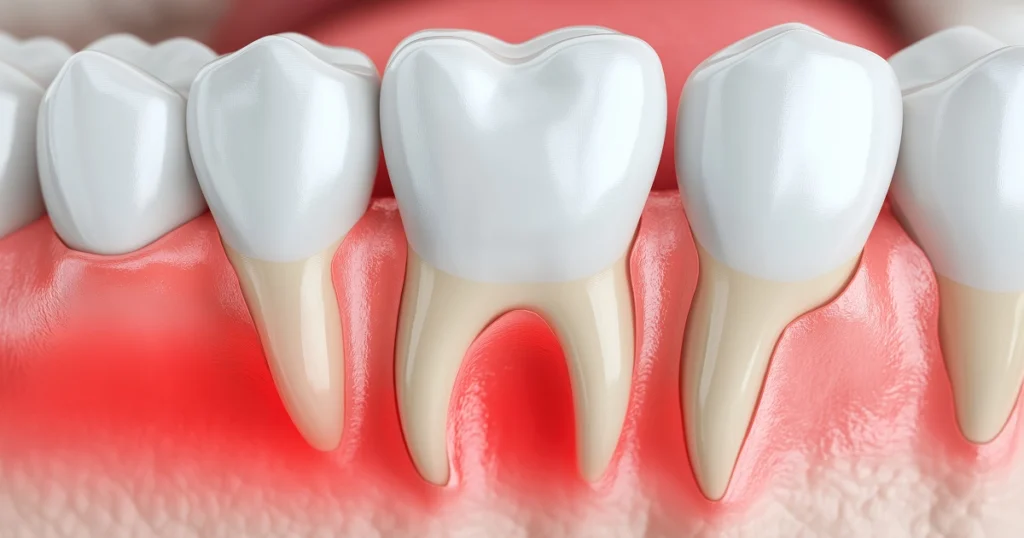
Gingivitis is the earliest and mildest stage. Here, inflammation is limited to the gum tissue itself. Gums may appear red or swollen and may bleed easily during brushing or flossing. The important thing about gingivitis is that it is typically reversible. Because the bone and deeper supporting tissues usually haven’t been affected yet, improved daily care combined with professional cleaning can often bring the gums back to health.
Periodontitis is the more advanced stage, where inflammation has extended below the gumline and begun to affect the bone and connective tissue that anchor your teeth. As this happens, the gums can pull away from the teeth and form pockets that trap more bacteria. Over time, periodontitis can lead to bone loss, loose teeth, and eventually tooth loss. Damage from periodontitis is generally not reversible, but it can be managed and its progression slowed or stopped with appropriate care. This is why early attention matters so much.
Common signs and symptoms
Recognizing the signs of gum disease early gives you the best chance of keeping it mild. Watch for:
- Bleeding gums when you brush or floss
- Red, swollen, or tender gums
- Gums that feel sore or look shiny and puffy
- Persistent bad breath or a bad taste that doesn’t go away
- Gums that appear to be pulling back from the teeth (mild recession — more on that below)
- Teeth that feel loose or seem to be shifting
- A change in how your teeth fit together when you bite
- Sensitivity along the gumline
Keep in mind that gum disease can be present even when symptoms are subtle or absent, which is one reason regular dental visits are so valuable. Only an in-person exam can tell you what’s actually happening below the gumline.
Causes and risk factors
The primary driver of gum disease is the buildup of plaque and tartar, but several factors can raise your risk or speed things along:
- Inconsistent brushing and flossing
- Smoking or other tobacco use
- Diabetes and certain other health conditions
- Hormonal changes, such as during pregnancy
- Some medications that reduce saliva flow
- Genetics and family history
- Teeth grinding, which can add stress to supporting tissues
You can’t control every risk factor, but good daily habits and regular professional cleanings go a long way toward keeping your gums healthy.
How gum disease is treated
Treatment depends on the stage and how far the condition has progressed. Our dentists at EXO Dental are experienced in evaluating gum health and will recommend an approach based on what they find at your exam. Common steps include:
- Professional cleanings. For gingivitis and prevention, a routine cleaning to remove plaque and tartar, paired with better home care, is often enough to restore healthy gums.
- Deep cleaning (scaling and root planing). For periodontitis, a deeper cleaning removes tartar and bacteria from below the gumline and smooths the root surfaces so the gums can reattach more comfortably. This is sometimes done in sections and may involve local numbing for your comfort.
- Ongoing periodontal maintenance. Once gum disease has been treated, more frequent maintenance visits help keep it under control and catch any changes early. Think of this as long-term management rather than a one-time fix.
As a general national estimate, scaling and root planing can range widely — often from around a few hundred dollars per section of the mouth — but these are general national estimates, not EXO’s prices, and your actual cost is determined at an exam.
Why healthy gums matter
Gum disease isn’t only about your gums. Because periodontitis can destroy the bone that supports your teeth, advanced disease is one of the leading causes of tooth loss in adults. Healthy gums and bone also matter if you’re ever considering tooth replacement. Options like dental implants depend on having enough healthy bone and gum tissue to support them, so keeping gum disease in check helps protect your future options. If bone loss has already occurred, procedures such as bone grafting may be discussed to help rebuild a foundation.
A quick note on gum recession: while gums pulling back from the teeth can be related to gum disease, receding gums is a distinct topic with its own causes and care. We cover it separately in our companion Receding Gums guide.
If you’ve noticed bleeding, swollen, or tender gums — or it’s simply been a while since your last visit — the most helpful thing you can do is have your gums evaluated in person. Our dentists can tell you exactly what’s going on and talk through the right next steps for you, with no pressure.
EXO Dental serves patients at three offices: Rogers, AR · Topeka, KS · Van Buren, AR. Reach out through our contact page to book an exam at the office nearest you.
Frequently asked questions
Is gum disease reversible?
Gingivitis, the earliest stage, is often reversible with professional cleaning and good home care. Periodontitis is generally not reversible, but it can be managed to slow or stop its progression.
Are bleeding gums always a sign of gum disease?
Bleeding gums are a common early sign, but they can have other causes too. The best way to know what’s behind it is an in-person exam.
Does gum disease hurt?
Often it doesn’t, especially early on. Many people have no pain even as the condition progresses, which is why regular checkups are important.
Can gum disease cause tooth loss?
Advanced periodontitis can damage the bone that supports your teeth and is a leading cause of adult tooth loss. Early treatment helps protect your teeth.
How is gum disease diagnosed?
A dentist examines your gums, measures the pockets around your teeth, and may take X-rays to check the bone. This can only be done in person.
How often should I have my teeth cleaned?
Many people do well with routine cleanings, while those managing gum disease may need more frequent periodontal maintenance. Your dentist will recommend a schedule based on your needs.
Does insurance cover gum disease treatment?
EXO Dental is fee-for-service and out-of-network. We provide itemized documentation so you can submit for out-of-network reimbursement with your insurer if you choose.
Can I prevent gum disease?
Consistent brushing and flossing, not using tobacco, and keeping up with professional cleanings all help lower your risk.