Dental Bone Graft & Sinus Lift
A dental bone graft is a common, routine procedure that rebuilds bone in your jaw so it can firmly support a dental implant. If you have been told you need a bone graft for dental implants, there is no reason to worry. At EXO Dental, our implant-focused dentists in Rogers, AR, Topeka, KS, and Van Buren, AR perform bone grafting and sinus lifts every week as a comfortable first step toward replacing missing teeth. Our dentists have extensive training in implant treatment, and we will explain every step in plain language before we begin.
Why Would I Need a Dental Bone Graft?
Dental implants need a solid foundation of bone to anchor into. When a tooth is missing or has been gone for a while, the bone in that area naturally begins to shrink, because it is no longer being stimulated by a tooth root. Over months and years, this can leave too little bone to hold an implant securely. A bone graft simply adds volume back to that area. Once the graft heals and your body builds new bone around it, your jaw is strong enough to support a long-lasting implant, whether that is a single tooth implant or a full arch with full mouth dental implants. You may need bone grafting if you:
- Have had a tooth missing for some time and notice the area has thinned
- Are having a tooth removed and want to preserve the site for a future implant
- Have been told you lack enough bone height or width for an implant
- Need implants in the upper back jaw, where the sinus sits close to the bone
Types of Bone Grafting for Implants
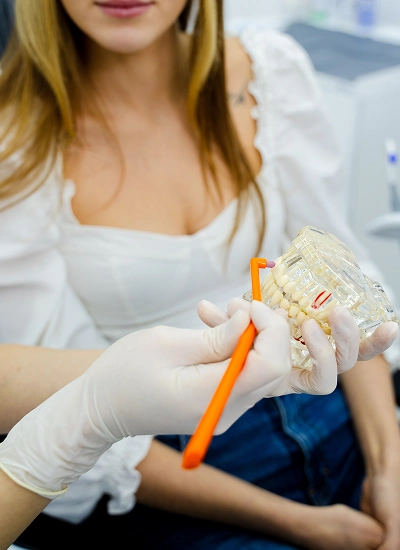
Socket preservation
When a tooth is removed, we can place graft material into the empty socket right away. This is called socket preservation, and it helps keep the bone from collapsing so the site stays ready for an implant later. It is often done at the same time as your tooth extraction.
Ridge augmentation
If the bony ridge that once held your teeth has already narrowed or shrunk, ridge augmentation rebuilds its height and width. This restores a healthy shape to the jaw so an implant can be placed with strong support on all sides.
Sinus lift
In the upper back jaw, the sinus cavities sit just above your teeth. When bone there is too thin for implants, a sinus lift gently raises the sinus membrane and adds bone graft material beneath it. This creates the height needed to place upper implants securely. It is a well-established, predictable procedure.
What to Expect During Your Procedure
Bone grafting is usually a straightforward, in-office procedure. We numb the area thoroughly, and for anxious patients we offer sedation dentistry so you stay calm and comfortable throughout. The graft material is placed, the area is closed, and you head home the same day with clear aftercare instructions.
Most patients are pleasantly surprised by how manageable it is. Any tenderness afterward is typically mild and eases within a few days with simple care and over-the-counter comfort measures.
Comfortable, Reassuring Care at EXO Dental
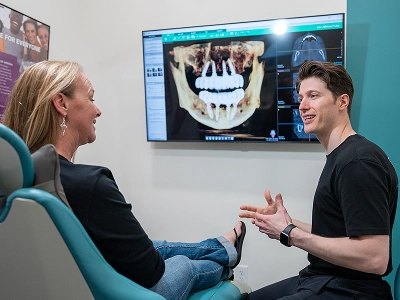
We know that hearing you need “extra work” before implants can feel discouraging. Our team’s job is to make it easy. We keep you informed, keep you comfortable, and treat bone grafting as the routine,everyday step it is.
If you are ready to explore replacing missing teeth, book a free consultation and we will let you know whether a graft is needed and what your options are.
Healing and the Road to Your Implant
After a graft, your body needs time to build new, strong bone around the graft material. Depending on the size of the graft, this healing period commonly ranges from a few months before the site is ready for an implant. In some cases, smaller grafts can be done at the same time as implant placement.
We will monitor your healing with follow-up visits and, when appropriate, a 3-D scan to confirm your jaw is ready. Think of bone grafting as an investment in a stable, long-lasting result: it sets the stage for implants that fit and function beautifully for years.
Frequently asked questions
Is a dental bone graft painful?
The area is fully numbed, so you should not feel the extraction. We also offer sedation for comfort, and most patients manage the recovery with simple pain relief.
How long does a bone graft take to heal before I can get an implant?
Not always. Your dentist confirms at your consult whether to remove one, a few or all four based on your scan and symptoms.
What is a sinus lift and do I need one?
Most patients feel much better within three to seven days, with gum tissue continuing to heal over the following weeks.
Is bone grafting safe and routine?
Dry socket is the early loss of the healing clot. Avoid straws, smoking and forceful rinsing, and follow your aftercare to lower the risk.